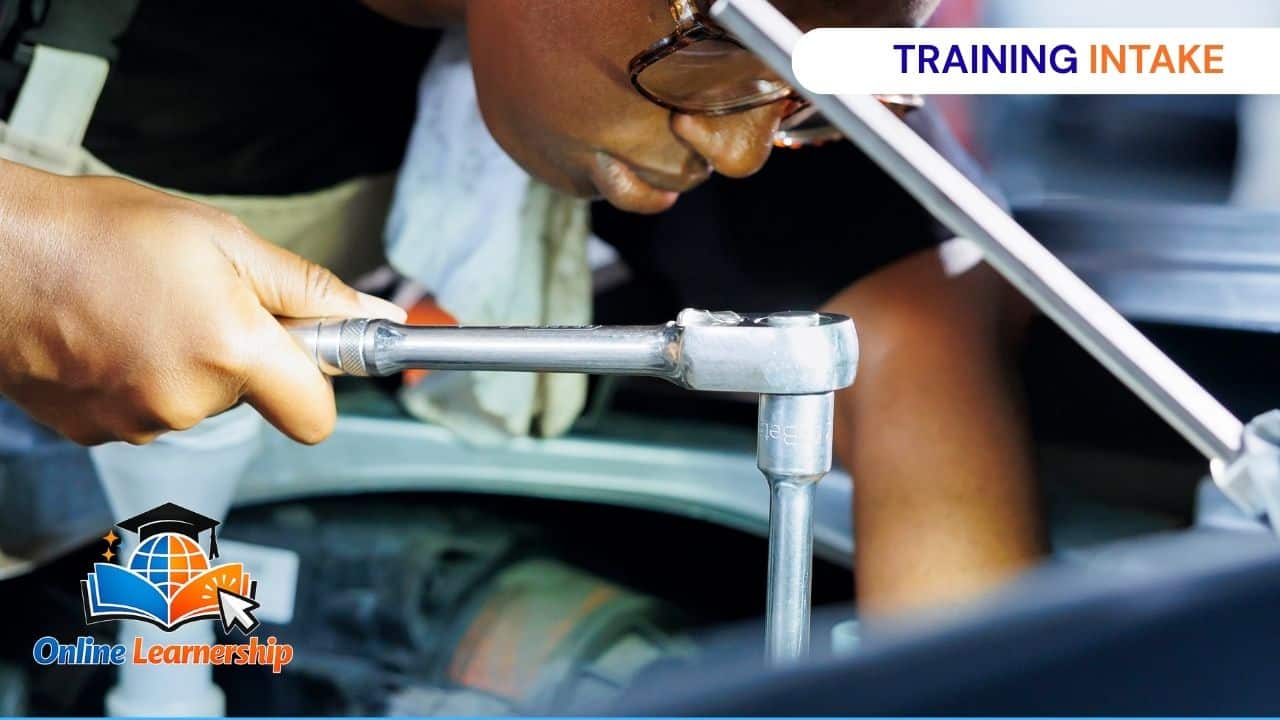
Basic CNC Lathe Training 2026: How to Apply Successfully and Earn R3,500 Stipend – Everything You Need to Know
Are you looking to break into the fast-growing industrial and mechanical engineering sectors? The Basic CNC Lathe Machine Operation & Programming Training Programme offers hands-on technical instruction, practical machinery experience, and a monthly stipend of R3,500. Discover everything you need to know about eligibility requirements, training schedules, module breakdowns, and step-by-step application instructions to secure your spot today.
Quick Information Box
- Programme Name: Basic CNC Lathe Machine Operation & Programming
- Employer / Training Provider: CNC Manufacturing Training Centre
- Location: Training Centre Campus / On-site Technical Workshop
- Duration: Full-time (3–14 August) | Part-time (31 October & 7, 14, 27 November)
- Monthly Stipend/Salary: R3,500
- Closing Date: Open until allocated seats are filled (Early submission recommended)
- Reference Number: CNC-LATHE-2026
- Application Method: Online via www.cncmanufacturingtraining.com or Direct Telephonic Registration (+267 393 4353 / 76 933 607 / 72 701 979)
Introduction
In an increasingly automated industrial landscape, high-precision technical skills are among the most sought-after assets across engineering, automotive production, toolmaking, and metal fabrication industries. As South Africa and its regional economic partners continue to prioritize local manufacturing capabilities and youth skills acquisition, specialized vocational programmes offer a direct pathway to sustainable employment.
The newly announced Basic CNC Lathe Machine Operation & Programming programme represents a premier opportunity for aspiring artisans, mechanical enthusiasts, and technical graduates to acquire high-value industry skills. Designed to bridge the gap between theoretical knowledge and practical workshop execution, this comprehensive training course equips participants with foundational skills in Computer Numerical Control (CNC) machinery.
Crucially, participants enrolled in the programme receive a structured monthly stipend of R3,500, helping offset living expenses while they gain intensive practical experience. With flexible delivery modes including both full-time block schedules in August and part-time weekend schedules spanning October and November, this initiative accommodates both full-time job seekers and individuals balancing existing commitments.
If you are eager to build a resilient career in modern manufacturing and master the mechanics of precision lathe operation, this detailed guide provides everything you need to understand the entry requirements, curriculum highlights, stipend structure, and application procedures for 2026.
Basic CNC Lathe Training Programme Overview
The primary goal of the Basic CNC Lathe Machine Operation & Programming initiative is to build technical capacity in automated machining. Modern engineering workshops have shifted away from entirely manual turning processes, relying heavily on computer-programmed machinery that ensures micro-level accuracy, high repeatability, and reduced material waste.
Through this training, candidates receive direct instruction from seasoned mechanical engineering professionals. The curriculum combines fundamental mathematical calculations, engineering drawing interpretation, G-code and M-code programming, machine setup, tool selection, and real-time lathe operations. Participants spend substantial time in a active workshop environment, applying classroom concepts directly to real industrial equipment.
Core Objectives and Participant Benefits
- Practical Machine Mastery: Transition from foundational mechanical theory to operating real CNC turning centers safely and efficiently.
- Industry-Relevant Programming: Learn to manually draft, edit, and troubleshoot standard G-code programs for complex turning operations.
- Financial Assistance: Receive a stipend of R3,500 to assist with transport, meals, and study materials throughout the training period.
- Enhanced Employability: Acquire specialized certification that significantly improves prospects in manufacturing, automotive assembly, aerospace prototyping, and heavy industrial plant maintenance.
Basic CNC Lathe Training Available Opportunities
The manufacturing sector relies heavily on trained personnel who can seamlessly interpret design blueprints and configure automated tools. Enrolling in this short-course training equips learners to compete for various specialized roles across diverse industrial sectors.
Potential Career Pathways Upon Completion
- Junior CNC Lathe Operator: Responsible for setting up workpiece materials, loading pre-written G-code programs, monitoring machine passes, and measuring finished components against strict quality tolerances.
- Trainee CNC Programmer: Focuses on converting technical engineering drawings into machine-readable code, selecting appropriate cutting feeds, speeds, and tool paths.
- Assistant Machine Tool Setter: Specializes in changing lathe inserts, configuring hydraulic chucks, setting tool height offsets, and running test cycles to ensure operational safety.
- General Mechanical Workshop Assistant: Provides comprehensive support across manufacturing lines, quality control stations, and component assembly units.
Workplace Exposure Locations
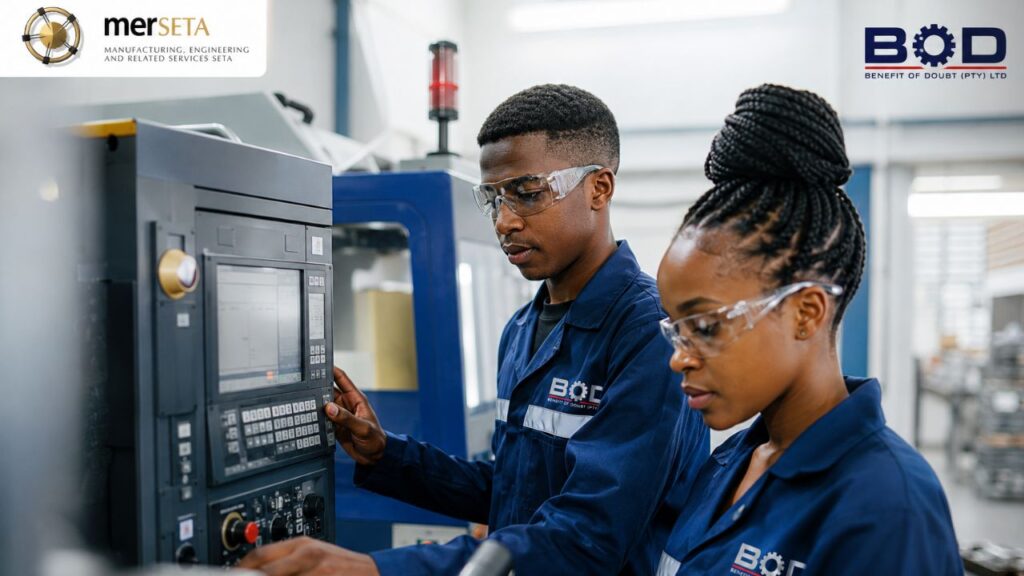
Practical modules take place within fully equipped technical training workshops designed to replicate authentic factory environments. Trainees interact with modern CNC lathes, digital measuring instruments (such as vernier calipers and micrometers), and cutting-edge safety infrastructure.
Basic CNC Lathe Training Minimum Requirements
To maintain high safety standards in workshop environments and ensure all participants can keep pace with the technical curriculum, specific minimum eligibility criteria apply.
Educational Requirements
- Minimum Qualification: National Senior Certificate (Matric / Grade 12) or equivalent NQF Level 4 qualification.
- Key Subject Strengths: Sound understanding of Mathematics or Mathematical Literacy, as well as Physical Science or Mechanical Technology, is highly advantageous due to the numerical calculations required in programming.
- TVET / N-Course Qualifications: Candidates holding N1, N2, or N3 certificates in Mechanical Engineering, Fitting and Turning, or Motor Mechanics are strongly encouraged to apply.
Age Requirements
- Minimum Age: Applicants must be at least 18 years old at the time of commencement due to occupational health and safety regulations governing machinery operation.
- Maximum Age: There is no strict upper age restriction for this programme. Both young entry-level job seekers and mature individuals seeking technical upskilling or career redirection are welcome to apply.
Additional Requirements
To qualify for consideration and ensure smooth integration into workshop activities, candidates should satisfy the following basic criteria:
- Citizenship & Residency: Open to South African citizens, regional residents, and legally eligible foreign nationals holding valid work or training permits.
- Language Proficiency: Strong working knowledge of written and spoken English, as technical instruction, programming manuals, and safety protocols are delivered in English.
- Physical Aptitude & Health: Good hand-eye coordination, spatial reasoning, and physical capability to stand for extended periods during practical machining sessions.
- Required Documentation:
- Updated, professionally formatted CV.
- Certified copy of National Identity Document or valid Passport.
- Certified copies of highest academic transcripts or school-leaving certificates.
- Proof of residence (where required for administrative processing).
Basic CNC Lathe Training Monthly Stipend and Benefits
Pursuing professional development requires both time and financial commitment. To lower barriers to entry for dedicated learners, this programme provides a supportive compensation package along with comprehensive educational resources.
Monthly Stipend
Enrolled candidates receive a structured monthly stipend of R3,500. This financial allowance is specifically provided to help cover essential living costs during the training period, including daily transport to workshop facilities, personal protective equipment (PPE) upkeep, and instructional materials.
Skills and Professional Growth Benefits
- High-Impact Technical Knowledge: Develop hands-on proficiency with modern industrial computer-controlled lathes, moving beyond pure theory.
- Industry-Standard Safety Training: Learn best practices regarding workshop safety, emergency shut-off procedures, coolant management, and personal safety equipment compliance.
- Portfolio Development: Complete actual turning projects that serve as tangible proof of capability when interviewing with potential engineering employers.
- Networking Opportunities: Connect directly with certified technical trainers, field experts, and fellow peers pursuing careers in industrial manufacturing.
Why This Basic CNC Lathe Training Opportunity Matters for South African Youth
Youth unemployment remains one of the most pressing socio-economic challenges in South Africa and the broader southern African region. A primary factor contributing to youth joblessness is the structural gap between theoretical academic qualifications and practical, market-ready technical skills demanded by employers.
Short-course technical training initiatives, particularly in specialized areas like CNC lathe operation and programming, directly address this gap. Rather than spending years in purely theoretical studies, candidates undergo fast-paced, high-intensity technical training that translates directly into workplace readiness.
Furthermore, industrial automation is rapidly expanding across African manufacturing hubs. Companies operating in automotive assembly, mining machinery production, agricultural tool fabrication, and structural engineering continuously search for machine operators who require minimal onboarding supervision. By obtaining recognized proficiency in CNC lathe programming, young job seekers elevate their CVs, transform their employment prospects, and build a foundation for long-term technical careers.
Basic CNC Lathe Training Application Process
Securing a seat in the Basic CNC Lathe Machine Operation & Programming course requires a complete and prompt application. Because practical workshop seats are limited to ensure safe trainer-to-student ratios, early submission is essential.
       [ STEP 1: Gather & Certify Documents ]
                         │
                         ▼
       [ STEP 2: Choose Training Schedule ]
       (Full-Time Aug OR Part-Time Oct/Nov)
                         │
                         ▼
       [ STEP 3: Complete Online/Phone Application ]
       (Visit Portal or Call Admissions Direct)
                         │
                         ▼
       [ STEP 4: Confirm Registration & Seat ]
Documents Required
Ensure clear, high-resolution copies of all required paperwork are prepared prior to beginning your application:
- Detailed Curriculum Vitae (CV): Highlighting any prior technical exposure, school subjects, or work history.
- Identity Document: Certified copy of South African ID card/book or international passport.
- Academic Records: Certified copy of Matric result statement, TVET college transcripts, or relevant trade certificates.
- Reference Letters: (Optional) Any formal letters of recommendation from prior employers, teachers, or workshop instructors.
Important Dates
Applicants can choose between two distinct learning tracks based on their availability:
- Full-Time Intensive Track:
- Dates: 3 August – 14 August 2026
- Structure: Daily full-day workshop immersion and classroom theory.
- Part-Time Weekend Track:
- Dates: 31 October, 7 November, 14 November, and 27 November 2026
- Structure: Focused weekend sessions designed for working professionals or busy students.
Step-by-Step Application Guide
- Visit the Official Training Portal: Access the application interface at www.cncmanufacturingtraining.com.
- Review Course Modules: Carefully read through the course syllabus to ensure the selected track aligns with your career objectives.
- Fill Out the Application Form: Input your complete personal information, contact details, educational history, and preferred training schedule (Full-time or Part-time).
- Upload Documentation: Attach clear digital copies of your certified ID, academic certificates, and updated CV.
- Alternative Direct Registration: If you encounter technical issues or prefer telephone registration, contact the admissions desk directly at (+267) 393 4353, or via mobile/WhatsApp lines at 76 933 607 or 72 701 979.
- Submit and Save Confirmation: Complete your submission and record your reference details for future follow-up.
Application Tips: Basic CNC Lathe Training
- Double-Check Contact Information: Ensure your cell phone number and email address are correct so admissions officers can reach you promptly.
- Certify Documents Recently: Make sure certified copies are clear, legible, and stamped by a Commissioner of Oaths within the last 3 months.
- Highlight Technical Interests: Tailor your CV to emphasize mathematical skills, mechanical aptitude, or any past experience using hand tools or machinery.
Common Mistakes Applicants Should Avoid
Many prospective students miss out on valuable training opportunities due to simple errors during the submission process. Take care to avoid the following common pitfalls:
- Submitting Incomplete Documentation: Failing to attach certified copies of your ID or academic records often leads to immediate application rejection.
- Waiting Until the Final Deadline: Workshop seats are allocated on a rolling basis. Waiting until the final days may mean available spaces are fully booked.
- Providing Incorrect Phone Numbers: Admission officers rely heavily on direct calls or SMS notifications. An inactive phone number can cause you to lose your spot.
- Ignoring Schedule Conflicts: Carefully evaluate whether you can attend all required days for either the full-time block (3–14 August) or the part-time weekend track (October/November) before committing.
DISCOVER MORE:
- APPRENTICESHIP
- GRADUATE PROGRAMME 2026
- INTERNSHIP 2026
- Learnerships 2026
- Learning Program 2026
- ONLINE APPLICATION
- ONLINE COURSES
- PROGRAMME 2026
- SETA
- Training Programme
Final Thoughts
The Basic CNC Lathe Machine Operation & Programming course represents a practical, high-value opportunity for anyone looking to build a technical career in manufacturing. With structured stipend support of R3,500, flexible full-time or part-time scheduling options, and intensive hands-on instruction, this programme gives learners the practical tools needed to thrive in modern engineering workshops. Take control of your career path today by gathering your documents and submitting your application early.
Frequently Asked Questions (FAQ)
Who can apply for the Basic CNC Lathe Training programme?
Anyone who is at least 18 years old, holds a minimum of a Grade 12 or equivalent qualification with basic mathematical understanding, and possesses a strong interest in mechanical manufacturing can apply.
What qualifications are required to join?
A Grade 12 (Matric) certificate or equivalent NQF Level 4 qualification is required. A background in Mathematics, Physical Science, or TVET N-courses (N1–N3) in mechanical fields is advantageous.
What documents are needed during application?
You must submit an updated CV, certified copies of your Identity Document or Passport, and certified copies of your highest academic transcripts and certificates.
What is the age requirement for this course?
Applicants must be at least 18 years old due to safety regulations in mechanical workshops. There is no upper age limit.
Is previous Basic CNC Lathe Training operating experience required?
No, this is an introductory and foundational course designed to teach basic CNC lathe operation, machine setup, safety protocols, and introductory G-code programming from the ground up.
Is the Basic CNC Lathe Training programme paid?
Yes, enrolled trainees receive a monthly stipend of R3,500 to support living expenses and transport during their training period.
How much is the stipend provided to candidates?
The stipend is R3,500 per month for the duration of the active training period.
Where will successful applicants attend their practical sessions?
Training takes place at the specialized CNC Manufacturing Training Centre facilities, featuring fully equipped engineering workshops and automated lathe machinery.
When are the Basic CNC Lathe Training sessions held?
The full-time block runs from 3 August to 14 August 2026. The part-time weekend track takes place on 31 October and 7, 14, and 27 November 2026.
How are shortlisted candidates contacted?
Applicants will be notified via direct telephone calls, SMS messages, or official email communications using the contact information provided on their application form.
Can I apply online and telephonically?
Yes, applicants can submit details online through www.cncmanufacturingtraining.com or register telephonically by calling (+267) 393 4353, 76 933 607, or 72 701 979.
What career opportunities exist after finishing this training?
Graduates can pursue entry-level roles such as Junior CNC Operators, Assistant Tool Setters, Trainee Programmers, and General Workshop Assistants across automotive, structural steel, and industrial manufacturing sectors.
Before applying, make sure you:
- Update your CV.
- Ensure your contact details are correct.
- Upload clear certified documents if requested.
- Double-check your academic information.
- Apply well before the closing date.
- Keep copies of your application confirmation.
Submitting an incomplete application may reduce your chances of being shortlisted.
ONLINELEARNERSHIP Advice
If you qualify for this opportunity, do not wait until the final day to apply. Municipal recruitment systems often experience heavy traffic close to the closing date, and last-minute technical problems could prevent your application from being submitted successfully.
Before applying, make sure your CV is updated, your academic records are ready, and your proof of residence is available. Even if you are still completing your qualification and only require workplace exposure to graduate, this programme could provide the practical experience you need to complete your studies and strengthen your future employment prospects.
Also continue applying for similar internships and Work-Integrated Learning opportunities instead of relying on a single application.
Disclaimer: While every effort has been made to ensure the accuracy of this information, applicants are encouraged to verify all details directly with the official recruiting institution or employer before submitting an application. We are not affiliated with the recruiting organization and do not process applications on its behalf.

OnlineLearnership.co.za Editorial Team is dedicated to helping South Africans discover genuine career opportunities and build successful futures. Our team researches, verifies, and publishes the latest learnerships, internships, apprenticeships, graduate programmes, bursaries, entry-level jobs, and career development resources from trusted employers, government departments, municipalities, SETAs, TVET colleges, universities, and private companies across South Africa.
Our mission is to make career information easy to access by providing accurate, up-to-date, and easy-to-understand content that empowers job seekers, stude